
E148
Overcoming Procrastination (Coaching Session Breakdown)
Summary
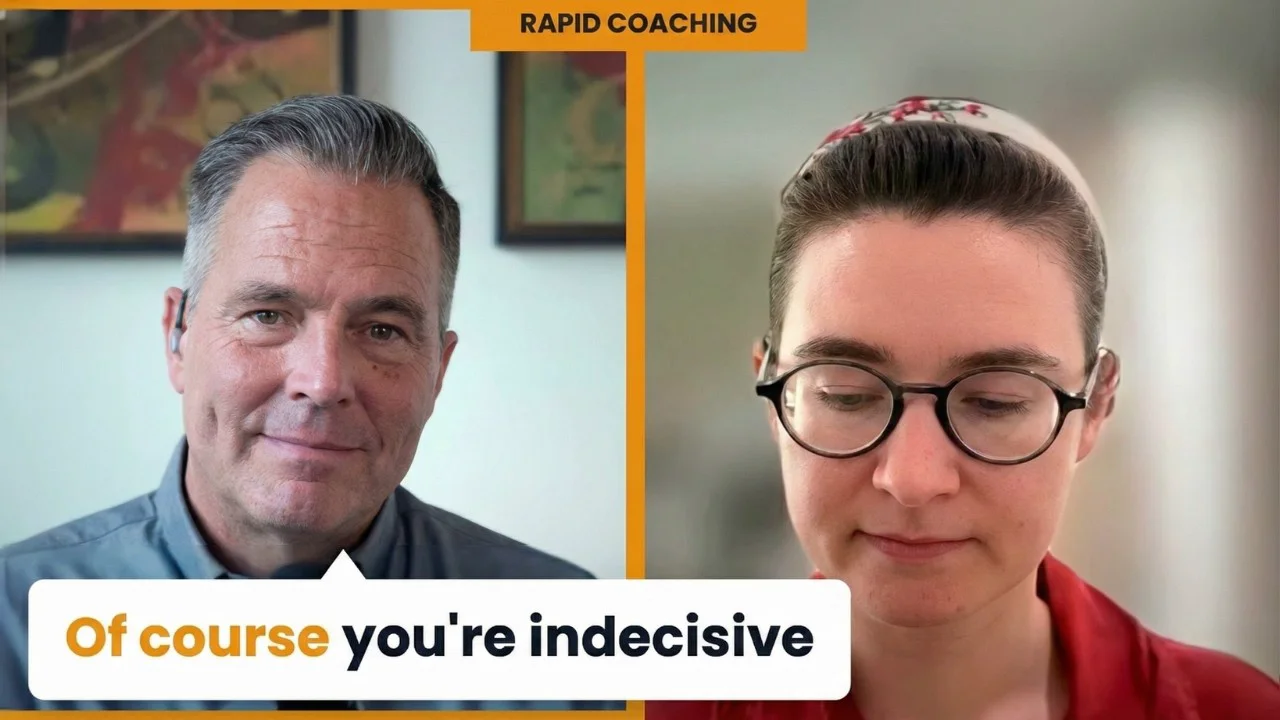
If you struggle with perfectionism, fear of success, or feeling like you have a "tyrant boss" inside your head, this breakdown reveals exactly how to shift that dynamic. In this episode, Joe and Brett analyze a rapid coaching session with a man who is a high-performer for others but frozen when it comes to his own business. They uncover how "stories" about perfectionism keep us stuck, and why trying to be a "good provider" can actually stop you from doing the work. As the man works with Joe to peel back the layers of what’s causing his procrastination, Brett and Joe dive deeper into the topic of procrastination, dissecting the root causes that cause us to freeze when we wish to act and paths forward for reframing both how to approach and to view procrastination. They discuss:
- The idea of procrastinator as an identity
- Self-judgement, perfectionism, and shame
- The emotional roots of procrastination
- How to dissolve stuckness
- Practical ways to approach procrastination
Transcript
Joe: He's not procrastinating over 98% of his life; he's procrastinating over one thing that he thinks is important. Whatever it is that you're working on, take a moment to see if this who you are or is this just one actually kind of small percentage of your life?
Brett: Life is constantly showing you counter evidence to your story, but when it does, we very quickly go there needs to be another problem.
Joe: People have a story about how they're messed up, but the story about how they're messed up is the problem, and this is so important if you're thinking about your procrastination.
Brett: Welcome to The Art of Accomplishment, where we explore living the life you want with enjoyment and ease. I'm Brett Kistler, and this is Joe Hudson, coach to some of the top Silicon Valley executives.
Today we're doing a coaching breakdown. Joe, could you tell us a little bit about what that means and what we're gonna be doing?
Joe: Sure. Hey Brett. Good to be with you, man.
Brett: Yeah, you too.
Joe: Yeah. As far as the coaching goes, the breakdown is meant to help you understand patterns of procrastination in yourself.
It is not meant to be a way to teach people how to coach. The reason that's the case and why I'm not gonna go into a lot of the details of how I coach is because coaching is best done from self. Awareness from self-realization, from understanding yourself. It's not best done through technique.
And so the best way to become a great coach that actually allows you to be fulfilled and not hurt other people is to just deeply understand yourself. And so even when we are teaching coaches, we're mostly just teaching people how to understand themselves, to be with themselves. So please don't take this as some sort of guide on how to coach. It's just not a great way to go.
Brett: All right, let's get into it.
Coachee: So my question for you,
Joe: Yeah.
Coachee: I procrastinate a lot,
Joe: Uh-huh,
Coachee: and
Joe: so just can we pause even this for a second? There's something that's so beautiful about, somebody who's just so clear on what they want. A lot of times people come into a coaching session with me in the, in our rapid coaching that, this is one of those free sessions that we do. And and they like circle around the well, and he's just bam, I procrastinate. And what I notice is when people do that, when people are really clear on their question, when they're really clear about what they want, when they allow themselves to actually want what they want, feel what they want, the breakthrough can happen a lot quicker and with a lot more ease than the folks who are not quite able yet to really allow themselves to feel what they want. Which is why, what makes this video such a it's just bam video. So a lot of movement really quickly.
Coachee: Question is, how do I get to the root of that procrastination?
Joe: You procrastinate a lot on what? 'Cause there's shit you don't procrastinate on, for instance, you don't procrastinate on this call. Putting your shirt on in the morning.
Coachee: Yeah.
Joe: So what is it that you procrastinate?
So this is something that's always the case, something the human mind. So there's two things about the human mind that really get you with procrastination, but they get you with a lot of the habits.
The first one is that you're constantly seeing the way that you are doing the thing that you don't want to do, but you're not seeing the thing that you're not doing, and you define yourself as the thing that is bad, not the thing that you think is good. He's saying he's a procrastinator. He probably walks around with that self-definition of a procrastinator, but in reality, he's not procrastinating over 98% of his life.
He is procrastinating over one thing that he thinks is important, probably most likely, maybe two, maybe three, but most of his life, he's not procrastinating. And this is just a really important thing to think about when whatever it is, if whatever it is that you're working on, take a moment to see is this who you are or is this just one actually kind of small percentage of your life?
And are you defining yourself by that thing? Or are you saying, oh, there's this little thing that I'm doing that, oh, that I would like to change? It's such a difference. The more of a mountain you make out of a mole hill, oftentimes, the more stuck you feel and the more stuck it seems.
Brett: Yeah, and also the more that you generalize something to your entire life, like always, never-ing.
Joe: Yes,
Brett: I am always this, I never do this. Then you don't really have the surface area for really fine-tuned insight. You don't get that.
Joe: Yeah,
Brett: Fine-grained noticing. Where exactly is this happening in my life?
Joe: Yeah.
Brett: So I can investigate that, and I love that. That's where we're starting here, right off the bat.
Joe: Yeah. The second thing that I'm doing is I'm just taking apart, and you're gonna see this in a minute. I'm just taking apart a story. So, typically, what happens is people have a story about how they're messed up. But the story about how they're messed up is the problem. The problem isn't that they're messed up.
The problem is that they hold that story. And there's a great saying, this is like the consciousness that got you into the problem isn't gonna be the consciousness that gets you out of the problem. And so it's a very similar situation where you believe your story about procrastination.
It's the same story you've been telling yourself fricking 20 times a day for decades, potentially. And you believe it, but it's not giving you any freedom. So what, what on earth would make you believe it instead of question it? So the first thing I'm gonna do here is just deconstruct the story. I'm just not gonna allow it to stand. And so let's see how it goes
Coachee: Um, work stuff. So I have, I've got some clients.
Joe: Again so not all your work stuff do you procrastinate on?
Coachee: No.
Joe: So what's the stuff that you procrastinate on in work?
Coachee: You could call it, let's just say side hustle, side project, which is something of my own.
Joe: Ah-huh. Okay.
Coachee: It's looked like that for many years.
Joe: So it's the confluence of something that takes care of yourself and money where you procrastinate, boom.
Coachee: Yes.
Joe: Taking care of somebody else and money. Do you procrastinate?
Coachee: Could you say that again?
Joe: If you're taking care of somebody else and earning money, do you procrastinate?
Coachee: IE my, my children. No, I do what I need to do for sure.
Joe: Okay. Okay. So something about the procrastination pattern often is that the procrastinator, it's not all, but maybe 80% of the time, the procrastinator is procrastinating over stuff that's about them, not about other people. It's stuff that they think it's personal.
It's like an art form, or it's like doing their poetry or starting their business. It's something that is gonna define who they are and it's not going to be about helping other people. And oftentimes, not all the time, but oftentimes, somebody who has a lot of habituation on procrastination, they are like more in the codependent realm, isn't quite, but they're more likely to wanna make sure other people are happy around them. And so that's like a typical aspect of procrastination. And oftentimes when someone's really working through their procrastination, they're also working with the fact that it's okay to take care of yourself, right? Like, I can be quote unquote selfish. I don't have to always be doing something for somebody else.
Brett: Yeah. It sounds like obligation plays in here too. It's like the things that he's obligated to do, like he's gotta put his shirt on to go do the job that he gets the money for, to pay for his kids' food.
Joe: Yeah.
Brett: Like that is something that gets done, but something that's like a vulnerable creation for and from himself, that steps into new territory that he, there might even be an aspect of being seen here, the fear of being seen in something that is more deeply felt as his.
Joe: Yeah. Oftentimes, that's the case.
The procrastination happens when it's personal and when it's rejection, whatever it is that you're doing can get rejected and you can take that personally. So one of the things that I'll do with people, though I'm not doing it with this gentleman, is to really help them understand. I just did this the other day in a coaching session.
Really help somebody understand that it's not personal. Business isn't personal. Your art form isn't personal, your mission isn't personal. There's a woman who's starting her own company and she was really successful helping other people with their companies. But now when it comes to hers. And all she had to do was see that the mission was beyond her, that the mission of her company was what she was serving instead of somebody else and that could deconstruct the procrastination. Because it was no longer personal.
Brett: Yeah. That's awesome. Moves past the identification as well.
Joe: Yeah, exactly.
Brett: Great. Let's move on.
Joe: The only place you're procrastinating is where money and taking care of yourself happens.
Coachee: Yes.
Joe: Is that accurate? Okay. Gotcha.
Coachee: Yeah.
Joe: Okay. So what makes you not want to take care of yourself?
Coachee: I take care of myself physically.
Joe: Yeah. What makes you wanna not take care of yourself financially?
Coachee: I think I oscillate between fear of success and failure.
Joe: Gotcha. Okay. Hold on a second. So that's his story. I'm not gonna let that story particularly stand because he's been telling himself he's scared. Most likely, he's been scared of success and failure for a long time. That's something that he read somewhere or saw something, and maybe he's even worked through it a couple times.
I'm not gonna let that story stand because again, the story is the thing that's keeping him trapped in the situation. So definitely want to deconstruct it. The other thing just to say about the procrastination pattern, particularly around money, is that oftentimes the money is a substitute for something else.
Meaning like it was, it's been, it used to be dad's love that I could never get. Now it's money I can never get. Or it used to be mom would always try to make me feel better with money and buy me stuff and so I'm buying my, I'm like spending money too quickly because I am trying to make myself feel better and avoid the thing underneath the way my mom taught me. And so oftentimes just the money itself is not the issue, it's some emotional thing that happened before money.
Brett: Safety, value, worth.
Joe: Safety. Exactly. All that stuff. Yeah. So I'm not going down that money route with him because he started by saying procrastination. So I'm following where he wants to go, and because he didn't say I have a money issue, I have a procrastination issue. And that's why we're gonna go down this route.
Brett: All right.
Coachee: The fear of success is that I'll become overwhelmed.
Joe: Yeah.
Coachee: And I'll be unable to handle,
Joe: How overwhelmed are you with the procrastination?
Coachee: Considerably.
Joe: Okay, so it's not overwhelm you're scared of. You're doing it to yourself all the time.
Coachee: How do you mean?
Joe: Yeah.
So stop right there. This is a great moment. What I said was entirely logical, entirely obvious. He said, I'm scared of success 'cause it'll overwhelm me. How much does your procrastination overwhelm you? It overwhelms me a lot. So you're not scared of overwhelm. You're doing it to yourself all the time, but his whole brain just went, what the he couldn't make sense of it.
That's where I know I'm starting to pierce the story. The story is so embedded, and when his brain can't see that obvious thing right away, he will in a second see it, but when he can't see it right away, that's my knowing, oh, he's broken through the story. Like the story is now no longer at this solid fortress of stuckness. It is now starting to crack open.
Brett: Yeah. There's a great example of what we call the four oh four. Which is, a page not found on the internet in your own consciousness. It's, I just stepped off the map. Where are we? What is this? What's happening? And that's where the magic happens. That's where patterns change, and different parts of ourselves emerge and get to be expressed.
Coachee: Exactly.
Joe: So you don't have any fear of overwhelm. That's happening all the time.
Coachee: It does happen all the time. Yeah.
Joe: Yeah. So what's the real fear?
Coachee: That ultimately it'll fail. So I think that the fear of success is ultimately the fear of failure, because it'll go up and then,
Joe: So that means when you're doing this stuff, so when you're working for somebody else, none of that shit's going through your head. When you're working for yourself, all that shit's going through your head. So when you're doing your work for yourself, gimme a project that you're procrastinating on.
Brett: I liked how right there, the story started to come back. Yeah. It's about success and failure.
Joe: Yes.
Brett: And then you did the same thing that was earlier in the call, which is just, let's look at this with more of a fine-tooth comb. Like, where is this happening? Where isn't it happening? And anybody listening to this can look through their own lives and say, okay, what are the problems that I think I have? Where exactly is it happening? Where exactly is it not happening?
Joe: Any way you can take Wonder back to our, the core stuff that we teach in the Connection Course. Any place where you can get to wonder is a, so you're looking at the whole problem in a fresh way where you're what's actually going down here? What are the details? This is a story I tell myself, how is it not true? Any way you can do that kind of stuff is gonna be helpful.
Yeah.
Coachee: I've got a website. I'm building out just a niche website.
Joe: Okay, great. So you're building out this website, and when you're doing it, how does it feel different in your body?
Hold on a second. There's this little itty-bitty clue that he just dropped right there.
Brett: He's just hedged a little bit.
Joe: Yeah. It's this kind of niche website.
Brett: Yeah.
Joe: But we're gonna find out, it's like incredibly important to him. But he says it's a kind of niche website. So there's like, that's like the dichotomy inside of him. Like he's telling us what that dichotomy, that fight inside of him is, here's this important thing, but it's not that important, but it's really important, but it's not that important.
Yeah. So that's a good clue for what's about to come.
Then when you're building a website out for your kid, or doing that kind of doing work for someone else?
Coachee: Yeah. If it was for my kid, for example there'd be a lightness about it. there just wouldn't be any pressure.
Joe: Great. So basically what you're saying is you do not want, you procrastinate on things that feel like shit.
Coachee: Yeah. Because I put so much importance and pressure on me, that being the thing that it's that or nothing.
Joe: Yeah. It defines you.
Coachee: Like, I'm gripping on.
Joe: Yeah. So if every time you played the guitar
Coachee: Yeah.
Joe: You were like, oh, I gotta do this fucking perfect. You would not play guitar.
Coachee: No. Yeah.
Joe: If every time you doom scrolled and you were like, I've gotta fucking do my finger perfectly on that scroll, you would stop doom scrolling.
Coachee: Yeah. The perfectionism is also at play here.
Brett: There's the perfectionism. It's also interesting when you know the way that he hedged, and he was like, yeah, it's a niche website. There's part of that aspect of being seen in how important this is to him. So there's absolutely, there's multiple layers here happening at once and you can see them all.
Joe: Yeah. And there's a hint about what he just said. He says perfectionism is also at play, his brain is now like looking for the new problem that he has to fix, which is perfectionism. So you're gonna watch him try to bring that same underlying mentality of, oh, what's this thing that I have to fix to make good enough so that finally I can have the thing that I want?
What's the thing that I have to fix so that I can finally be good enough to have the thing that I want? What's the thing that I have to fix that? And you're gonna watch that happen, which is the underlying pattern of procrastination. Often, not always, but often.
Brett: Yeah. Which is one thing that makes patterns in general so persistent is that
Joe: Yeah,
Brett: life is constantly showing you counter-evidence to your stories.
But when it does, we very quickly go there needs to be another problem, there needs to be another story. Because it would be really uncomfortable for me to go off the map and stay off the map.
Joe: Yeah.
Brett: Until I've learned a new map. So I, anything I can do to get back on the map.
Joe: Yeah. That's right.
Yeah. It also makes for a shitty website. Great websites connect. They're not perfect.
Coachee: Yeah. It's the kind of perfection where I'm not doing everything, redoing it and redoing it. It's the kind that stops me from starting. It's that kind of perfectionism.
Joe: That's right. Because as soon as you engage it feels like shit.
Coachee: Yeah. And what happens is I run into this I have a really low threshold for frustration and it feels if I'm taking a step forward, then something,
Joe: Yeah.
Coachee: Will get in my way. And my tolerance for that is
Joe: Yeah.
Coachee: It's almost rage.
Joe: Yeah. You're gonna get in the way. You're in the way.
Coachee: Yeah.
Joe: You're not like, how do I have fun building a website? You're like, how do I make a perfect website?
Coachee: Yeah, I am in the way 'cause it's all too much.
Joe: Let's just say for a second you were like, Hey, I'm gonna have fun building a website for myself. The only requirement, it doesn't matter how fucking good it is, the only requirement is that I have fun.
Coachee: There's a lot more energy in that, there's way less friction.
Joe: And what's the quality of the website gonna be compared to if you try to do it perfect, assuming you got it done, which I'm not gonna assume is true, but you got it done going, this has to be a perfect website.
Brett: There's something that's happening here where you're like, you are keeping you stuck. This is and he's yes. And if people are on their own and they make this recognition, they're often doing this anyway. They're like, oh, I'm keeping myself stuck. I'm the problem.
And it's happening in this kind of blame, self-judgment, shame way, and that's not what's happening here. Could you talk a little bit about what the difference is there and how that's showing up in this session?
Joe: Yeah. So the big difference is that, as I'm saying it to him, I'm not calling him bad.
So typically if you, if you can say, Hey, I'm keeping myself stuck, and you can do that with an open heart. There's freedom in it, and you can move through that pattern really quickly. If you are, I'm keeping myself stuck, and therefore I'm bad, and therefore I'm wrong, and therefore I need to be fixed, and your heart is closed towards yourself, then that is a pattern that will entrench.
If there's shame, that's a pattern that's gonna entrench. So, to recognize the truth with an open heart can actually move a pattern, right? Or the other way to say it is to recognize a pattern from view, which is I'm gonna be vulnerable. Yeah. I fucked up. I'm gonna be impartial. I don't need this to change.
I'm gonna be empathetic. I'm gonna be with myself emotionally. I'm not gonna try to push my emotions away, and I'm gonna be full of wonder. Also known as an open heart. If you can do that, then your pattern changes relatively quickly. But if you come to it with a closed heart, I'm wrong, I'm shamed, there's something wrong with me, I've gotta fix it, then oftentimes that pattern is gonna be very slow to change. If it changes at all.
Brett: Yeah. Another way to see that is the difference between bracing against it, which is tightening, constricting, and nothing's gonna change in that internal landscape.
Joe: Yeah.
Brett: Or embracing it. Okay. I'm here. I'm willing to see this, and I'm willing to be here for myself and really feel the feelings that come up, which is what's happening.
You're pointing these things out and he's seeing it, and you can see the emotion in his face. And those who are listening to this are probably feeling some emotion if they're resonating with this pattern. And pause right now for a moment. Just let yourself feel that, what's that like to feel that without shame, without blaming yourself or making yourself wrong.
Joe: And what's the quality of the website gonna be compared to if you try to do it perfect, assuming you got it done, which I'm not gonna assume is true, but you got it done going, this has to be a perfect website and you got it done saying, I'm gonna have fun doing this website. What would be the difference in quality of the websites?
Coachee: I imagine the one that's fun will be of higher quality.
Joe: Okay, but let's assume that it isn't, let's assume that it's shitty quality compared to the perfect one.
Coachee: Yeah.
Joe: And then you're like, you know what? I'm gonna have fun redoing my website, improving my website.
What's happening there is that, the introduction that I'm making there is that when people are scared, which is what this is underneath, right?
There's a fear that I'm not gonna be perfect. There's a fear. I'm gonna get rejected, or I'm gonna be accepted. There's a fear going on. Oftentimes what happens is there's a the, not oftentimes, almost always, the brain will create a false end. I will make a shitty website and it's over.
I will lose my job and it's over. I will get divorced and it's over. And so if you can see through that false end, then there's some freedom. Then the fear starts to wobble a little bit. And so all I'm doing here is also showing that, so you make a shitty website, you redo it, like what's the problem?
And which gives him a certain amount of freedom. And you can see his face as this is happening. He's heating up physically; he's heating up, his face is getting redder. It's like he's getting like a rush of life into his system. Okay.
Actually, you'll get the website.
Coachee: Yeah. It'll get done.
Joe: Yeah. It'll get done.
Coachee: Yeah.
Joe: Yeah.
Coachee: I'll go a lot further when it's fun.
Joe: That's right. And the only thing making it not fun is that you somehow think it's important.
Coachee: Yeah, that's right. It's it's the world-saving. Keep me off the streets.
Joe: Great. Now I'm gonna make you really uncomfortable.
Coachee: Okay?
Joe: Yeah. Here we go. Prove to all of us that it's important, your website.
Coachee: That it's important?
Brett: Yeah. It's so fucking important that it's not fun and you don't do it. So prove to us why it's so fucking important.
Joe: Okay, pause. This is where that niche thing is. I'm calling back the niche thing.
So to some degree there's some freedom in him owning it. To actually say the thing and then, because until you can say it, you can't see through it until you can own the thing, you can't. Every epiphany is a rut, is the beginning formation of a rut. And so until he can say, yes, this is important, not say it's niche to own the importance.
That's the beginning of him being able to see that this is just an iterative life, cool thing to do. It's no more or less important than sketching on a napkin, right? That if it's not personal, if it's not self-defining, then it can actually become fun. But he can't do that unless he actually owns the importance first.
Brett: Which is fascinating 'cause some of the most important pieces of art or math equations or discoveries were all found by sketching on a napkin.
Joe: Exactly. Yeah. That moment of not thinking about it in the shower or whatever. Yeah. Yeah, totally.
Coachee: Because if I don't do it, then I will be working for somebody else and that I don't wanna do that anymore. And my income will be limited and I won't get to where I wanna be and I won't be able to give my kids the lifestyle that I want them to have and be the dad that I wanna be. I'll be stuck.
Joe: You are stuck.
Okay. Hold on a second. There's this great moment and I, it's so beautiful. Like all of his care, all of this, you can just see like when he's doing a website, he's this defines how good of a dad I am. this, defines like how, how good of a person I am.
This is so important if you're thinking about your procrastination, 'cause that's in there on some level, if you're procrastinating over something that you consider to be important, you've made this thing about what could be a fun endeavor of learning, make a website. That you can do a thousand times and get it take a thousand times to get it right. You've turned that into, I'm a shitty father if I don't do this website.
Brett: Oof. Yeah. put that bluntly that hits, yeah.
Joe: Yeah. So it, and you also just see his like, how fucking beautiful of a man he is.
And that's the other thing is like he's seeing I am a procrastinator. I'm seeing he is a beautiful man who cares so fucking deeply. And if he could see himself through my eyes in that moment, there'd be nothing to procrastinate over because I'm already the thing that I want to fucking be. Like the website isn't gonna make me, I'm already a sweetheart. I'm already a good father. I already care. I already fucking love my kids. I already like, am providing for them. I don't have to do anything else to fucking deserve love. It's really hard not to love a man who just looked and did that. You have to, you gotta be cold as ice to not love that. But he can't love it because he, all he's seen is a procrastinator.
Brett: I'm sure this has nothing to do with why five minutes before we were recording, I was standing on my desk trying to tape a blanket to the window to change the lighting. Nothing to do with it.
Joe: Cool. Let's see where we go.
Brett: On, we go.
Coachee: I know. Yeah. For a long time.
Joe: Yeah. It's so important that it makes you stuck.
Coachee: Yeah. I think that, beneath that is the fear that I'll,
Joe: Which would you rather to work for somebody else or to constantly be under the yoke of a perfectionist? Cause that's your choice right now, and I see which one you're making.
Coachee: Yeah.
Brett: This points to the golden algorithm that we've talked about before, which is in his consciousness, he's got the shape of I don't want to be oppressed, I don't want to be working for someone else.
Joe: Yeah.
Brett: And that shape of his awareness of his consciousness is applying to himself. He has become his own oppressor. He has become the perfectionist boss.
Joe: And generally, probably I, yeah, 70% chance or something is he had a parent who was highly critical, who was constantly telling him he wasn't good enough, which is both why he wants to not work for somebody and why he's treating himself like this. So if I was in a deep, long-term relationship, coaching relationship with him, we would heal that relationship the, with the critical parent. And oftentimes people who are procrastinators had deeply critical parents.
Brett: Yeah. And another way that can show up is I think seeing your parents have their relationship with work be a certain way, and being like, I'm not gonna have that happen.
Joe: Yeah. Also, is that personal there Brett?
Brett: Little personal there. Yeah. And they can be the same thing. Parents passing down the same expectation of oppression and criticism that they've recreated in their work life. And you see it in their work life, and you're like, I don't want anything to do with that. I wanna be my own boss.
But until you get to the root of all of this, the way that you're gonna be your own boss is exactly the way you've been avoiding and trying to run from.
Joe: Exactly.
Brett: Yeah. Definitely a little personal. This one's definitely hitting for me as well. Yeah. Cool. Let's move on.
Coachee: Yeah. Okay. I see that.
Joe: You wanna work for yourself, you gotta be a good boss.
Coachee: Yeah. I gotta take the pressure off myself.
Joe: That is a way to put pressure on yourself.
That's the thing I was talking about earlier. That is him now needing to, creating something else that he needs to do to. It be good enough to get the love. That's the pattern that his parents taught him. That's the thing that, okay, now I have to deal with. Perfect. Once I deal with the perfectionism, then I'll be lovable.
Brett: Yeah.
Joe: And that that's the next one.
Brett: Another thing to be perfectionistic about, too. I gotta just take the pressure off myself in just the right way.
Joe: Yeah, exactly.
Brett: Yeah. I can't move forward if I'm putting pressure on myself.
Joe: Yeah, exactly.
Brett: Yeah.
Joe: I've gotta take the pressure off myself.
Coachee: Yeah. That's pressure, isn't it?
Joe: That's more pressure.
Coachee: Yeah, so how do I understand?
Joe: Could you imagine how horrible I'd be at what I'm doing right now if I needed to get a result?
Coachee: Very.
Joe: Yeah.
Coachee: Yeah. Probably wouldn't be sat here still.
Joe: Yeah, I would hate my job.
Coachee: Yeah.
Joe: Do you know how bad this session would be if you needed to be perfect?
Coachee: Yeah, it'd be pretty awful.
Joe: It'd be pretty awful. So, how do you just enjoy, like right now, how do you enjoy this moment 10% more?
Coachee: This moment right now.
Joe: This moment right now? Yeah, that looks like you did it.
Coachee: I just appreciate that I'm here.
Joe: Yeah.
Coachee: On a call with you and all of these people.
Joe: Yeah. That's how you enjoy your work more, too.
Coachee: Alright.
Joe: That's it.
Coachee: That's it.
Joe: That's it.
Coachee: Okay.
Joe: So what I want you to do is,
You see his whole face turn red. You see the laughter, the somatic recognition, it probably hasn't hit his head yet, but the somatic recognition is, I don't have to do anything to get that enjoyment, to get that love, to get that. I just actually have to be present in this moment. I have a little appreciation, like I have to actually be with the moment, and oh my, and you could see the laughter is oh, like at some point it'll hit his head that, oh, some version of in a war with yourself, you always lose. All I have to do is stop fighting, and I can actually just enjoy.
Brett: Yeah. What a subtle and important difference to, while you are in the process of working, while you're doing your art and your creation, coming from the place of, I am enjoying whatever I'm doing right now, however it is, versus once I get this little corner on the pixels, then I'll enjoy myself. Like the difference between running across a pond with stones and running across lily pads.
Joe: Yeah. So yeah. Beautiful.
That's it.
Coachee: Okay,
Joe: So, what I want you to do is for the next week, I want you to sit down in front of your computer with the intention to work and enjoy yourself. And the most important thing is to enjoy yourself. The second most important thing is to work.
Coachee: Fantastic. Thank you.
Joe: So it's just, oh, if I'm not enjoying myself, stop what I'm doing. Figure out a way to do it in a way that I enjoy it.
Coachee: Yeah.
Joe: Make your work something that is lovely for you to do, and you won't procrastinate.
Coachee: Yeah, I like that. Lovely for me to do.
Joe: Yeah.
Coachee: Yeah.
Brett: And the way that you closed it there by offering an experiment.
Joe: Yeah.
Brett: This is not something that he just learned from you, and he's gonna now have a voice in his head. That might happen a little bit. Sometimes people are like, oh, I imagine Joe says this, or Joe says that, or Brett says whatever.
Joe: Yeah.
Brett: But he's now got something to try to play with that he can iterate on. It's a first step of a many-step experiment that will integrate into his life to the extent that he runs with it.
Joe: Right? And that's what I'd say for anybody who's dealing with procrastination is investigate, deconstruct, see through wonder is one of the steps.
Experimentation is the second step. How do I do this in a way that's more enjoyable? Is one experiment. How do I respond to the voice in my head when it's critical is another experiment. How do I set up a sit? How do I do it in a way that's fun? Oh, is it more fun to create the website with somebody, and we do it together over the, over the screen share?
Or is it more fun to you know what I, if I were him, and I wanted to make sure this was fun, one of the experiments that I might run is to do it with my kid.
I bet he'd have a lot of fun putting that website together with his child, no matter how old the child is. So, but when you're in that, I'm bad. I'm procrastinating. You don't, there's no wonder, which leads to no new experiments.
Brett: Yeah. Which leads to stuckness.
Joe: Which leads to stuckness.
Brett: This has been a lovely experiment. I love doing these breakdowns.
Joe: Oh man, that was a fun one. Really appreciated that.
Brett: Yeah.
Joe: Thank you.
Brett: To date, this has been one of our biggest videos on YouTube.
Joe: Yeah,
Brett: So, I hope people really enjoy this.
Joe: Yeah, I hope it gets watched. That'd be great.
Brett: Yeah.
Joe: Awesome.
Brett: Awesome. Thank you, Joe. Thank you everybody for listening. Thank you to our participant for being so vulnerable and really showing up today. If you enjoyed what you heard today, please share it with a friend. We'd love for you to rate us on all the podcast apps.
Give us five stars is my preference, but whatever many stars you feel you got out of this session.
Joe: And if you're interested in experiments, we have a page where there's a huge amount of experiments you can try, or ways of trying it and the tools. So there's, we have so many resources that are free for you.
Brett: Yeah. Free workshops.
Joe: Yeah. And the best way to be able to know all the free resources is to sign up for the newsletter. If you sign up for the newsletter, you'll get all the free resources coming at you as we create them. So that's a incredibly like the most useful way to get involved for you.
Brett: Beautiful. All right. Take care everybody. This episode is produced by myself and Joe Hudson. Mun Yee Kelly is our production coordinator. All right, till next time.
Subscribe Now
Join the journey of Self-Discovery
Get ourcomplimentary 7-lesson mini-courseon how to approach transformation in the modern world, early access to our courses, and coaching opportunities with Joe Hudson.